

This note is submitted to inform the Southern African Development Community (SADC) of the recent developments in Madagascar, following a broad-based, peaceful civic movement led by the country’s youth, and to clarify that the ongoing transition adheres strictly to constitutional and democratic principles.
Generation Z Madagascar: The Torchbearer of a New Democratic Era
For several decades, Madagascar has suffered under the influence of a small political and economic elite. While a minority accumulated wealth with impunity, the vast majority of citizens endured worsening poverty and failing public services — including chronic power shortages, water scarcity, deteriorating hospitals, and decaying schools.
Over time, the State ceased to fulfill its fundamental responsibilities. It became an instrument of domination, marked by systemic corruption and a persistent disregard for the public interest. Justice was manipulated, elections were compromised, and dissenting voices were suppressed, resulting in a complete concentration of power.
September 25, 2025: The Awakening of a Determined Youth
This cycle of neglect and impunity was broken on September 25, 2025, when Generation Z of Madagascar — young citizens born into the digital age yet confronted by deep social injustice — rose up peacefully.
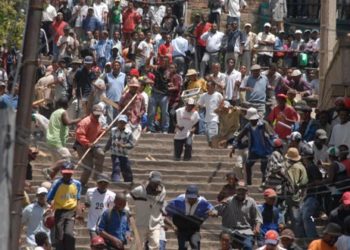
Without formal leadership or political affiliation, but guided by a strong belief in democratic renewal, thousands of young Malagasy gathered to demand transparency, dignity, and justice. Their slogan, “Tsy manaiky lembenana intsony!” (“Enough is enough!”), became the unifying expression of a nation’s longing for change.
“We are not here to take power.
We are here to return power to the people.”
— A 22-year-old protester, Ambohijatovo Square
This civic movement was non-partisan and rooted in democratic ideals, seeking only the restoration of good governance and the right to live with dignity in a just society.
Government Response and Institutional Reactions
The Government’s response under President Andry Rajoelina was regrettably marked by repression. Over two weeks, security forces — notably the gendarmerie — used disproportionate force against peaceful demonstrators, resulting in at least 24 fatalities.
In response to escalating violence, elements of the CAPSAT military brigade intervened to protect civilians and prevent further bloodshed. They subsequently assisted protesters in regrouping peacefully at May 13 Liberty Square, a historic site symbolizing democratic expression in Madagascar.
Constitutional Developments and Transition Process
Following these events, President Rajoelina, his former Prime Minister, and a prominent business associate accused of large-scale corruption left the country. In accordance with the Constitution of Madagascar, impeachment proceedings were initiated, and the High Constitutional Court (HCC) oversaw the establishment of an interim authority led by Colonel Michael, tasked with ensuring continuity of governance and the restoration of constitutional order. This process has been conducted transparently and within the framework of national law, under civilian oversight and with the participation of relevant institutions.
International Context
It is important to note that certain external actors, particularly France, maintained silence over longstanding governance issues in Madagascar despite evidence of significant corruption involving French-linked companies. One emblematic example was the unnecessary and costly cable car project, executed by a contractor affiliated with the French conglomerate Bouygues.
The facilitation of President Rajoelina’s departure on a French military aircraft has raised concerns among Malagasy citizens about foreign interference and the need to preserve national sovereignty during this transition.
Conclusion and Appeal to SADC.
The Government and people of Madagascar respectfully urge SADC to acknowledge that no military coup has taken place. The current developments reflect a constitutional and democratic transition, born from a popular demand for integrity, justice, and good governance.
I am convinced that Madagascar remains committed to regional stability, democratic principles, and cooperation with its African partners to ensure a peaceful and legitimate restoration of constitutional order.


 Aujourd'hui : 429